A north-facing bed spares you the worst of the afternoon sun, holds moisture longer than the rest of the garden, and produces greens that make a sunny border look brash by comparison. It also punishes guesswork. Put lavender or rosemary there and you will watch it stretch, sulk and fade over two seasons. Put the right plant there and the darkest corner of the garden becomes the calmest.
The catch is that "shade" covers several different situations. The strip along a north wall that catches a slice of morning sun is not the same as the ground beneath a dense conifer, and neither is the same as the bone-dry soil under a mature maple. Work out which one you have before you spend a penny, then choose from the plants below.
Start by naming your shade
Walk the bed three times in one day — mid-morning, early afternoon and late afternoon — and note where the sun actually lands. Then push a trowel into the soil and see what comes up.
- Deep shade — no direct sun at any point in the day. Usually under dense evergreens, on the north side of a building, or in the narrow gap between a fence and a wall.
- Dappled shade — filtered light through the leaves of a deciduous tree, or two or three hours of gentle morning sun. Bright enough to read a newspaper by for most of the day.
- Dry shade — the soil is dusty and light even after rain, because tree or hedge roots drink everything first. This is the hardest kind, and it is almost always found under mature trees.
These conditions overlap. A north border under a birch is dappled in May, deep in July and dry the whole way through. Plant for the hardest condition you find, not the kindest.
Plants for deep shade
Where light never lands, build structure before you worry about flowers. Ferns carry a dark corner better than anything else: male fern (Dryopteris filix-mas) and holly fern (Polystichum) are unfussy and hold their green through most winters. Japanese painted fern (Athyrium niponicum 'Pictum') keeps its silver markings only where a few rays sneak in, so site it at the edge of the gloom.
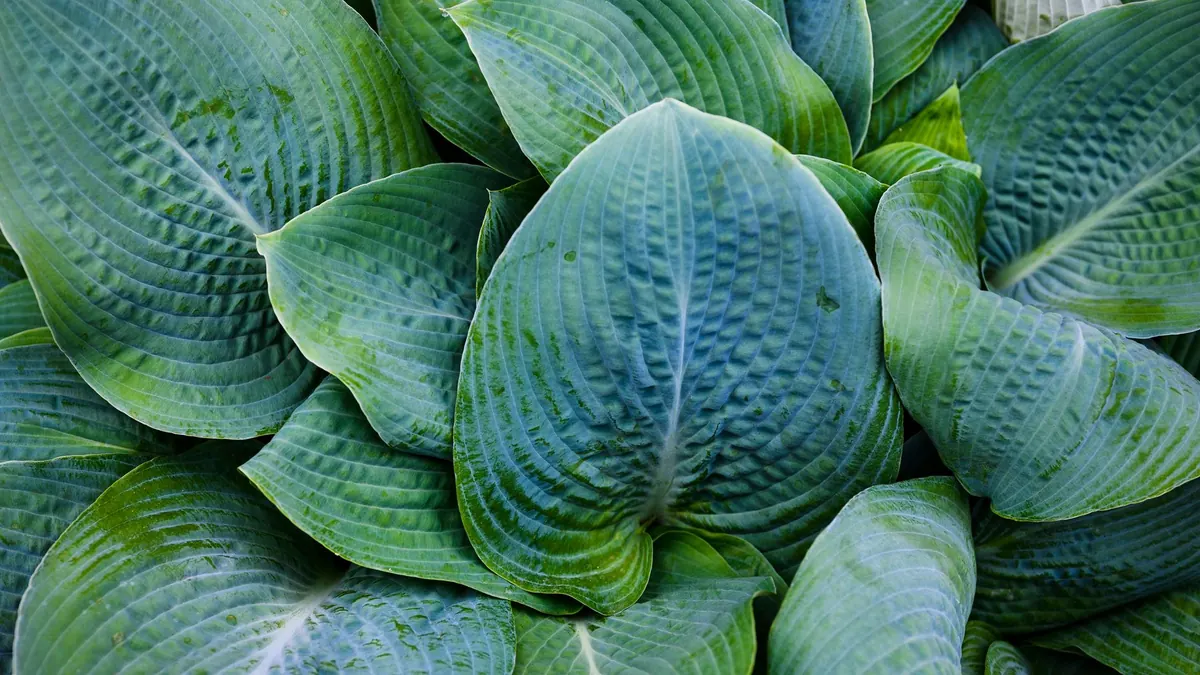
Hostas will grow in deep shade, though slowly, and slugs find them. Thick-leaved varieties come through better than thin, soft ones. Wild ginger (Asarum) makes a low, glossy carpet that looks deliberate rather than straggly, and Pachysandra terminalis will cover bare ground under shrubs where nothing else takes. Both spread, so give them room. For evergreen bones, use yew, boxwood, Skimmia and Liriope — they hold the bed together in February when everything else has vanished.
Plants for dappled shade
This is where shade gardening becomes generous. Filtered light is enough for most woodland plants, and the list is long:
- Hellebores — flowers from midwinter into spring, evergreen foliage, almost no upkeep.
- Epimedium — dainty spring flowers, handsome leaves that colour in autumn.
- Brunnera and Pulmonaria — silver-spotted foliage that brightens a dim corner, plus small blue flowers.
- Tiarella and Heuchera — low mounds of leaf colour; heucheras insist on good drainage.
- Solomon's seal (Polygonatum) — arching stems hung with white bells in late spring.
- Astilbe — feathery summer plumes, but it wants moisture, so keep it out of dry spots.
- Japanese anemone and toad lily (Tricyrtis) — flowers in late summer and autumn, exactly when the bed needs them.
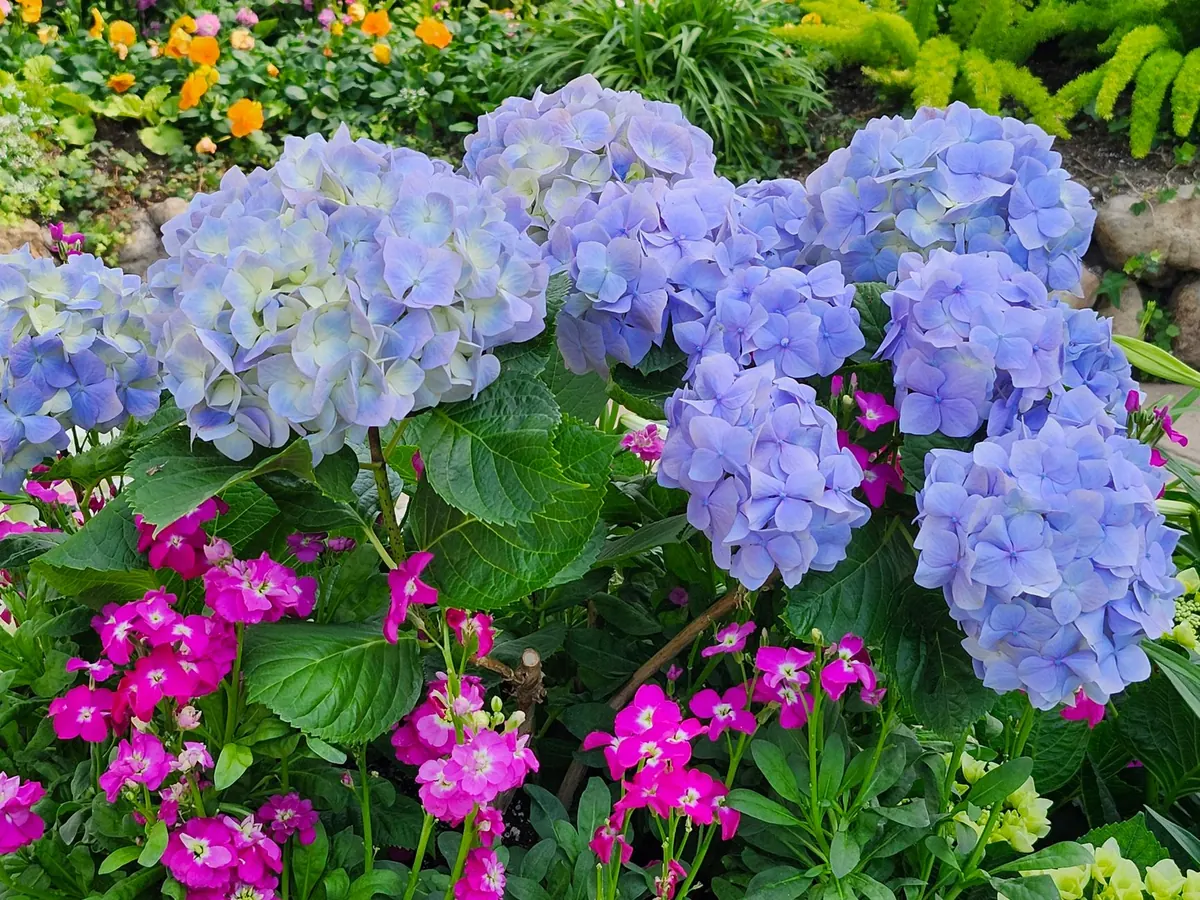
Around these, plant spring bulbs. Snowdrops, daffodils, wood anemones and hardy cyclamen all flower before the canopy closes overhead, then quietly disappear. Shrubs that earn their place here include rhododendron, pieris, hydrangea, dogwood and Japanese maple.
Plants for dry shade
Dry shade is the real test: poor soil, thieving roots, and watering that is often impractical. Choose plants that evolved under trees rather than fighting the situation.
Bigroot geranium (Geranium macrorrhizum) is the best of them — aromatic leaves, pink flowers in early summer, and a spreading mat that smothers weeds. Euphorbia amygdaloides var. robbiae does something similar with lime-green spring flowers; wear gloves, because the sap irritates skin. Add epimedium, Liriope, wild ginger, autumn cyclamen and polypody fern for a bed that rarely needs watering.
Two warnings. Vinca and ivy both grow in dry shade, but they will also swallow the bed, so use them only where you want a monoculture. And anything planted under a tree competes with that tree for water and nutrients: keep new plants at least a metre from the trunk, and never pile soil over the roots.
Planting and aftercare in low light
- Improve the soil with leaf mould or compost, working in pockets around tree roots rather than digging the whole bed over.
- Plant in spring or early autumn, when the soil is warm and damp, so roots settle in before summer.
- Water thoroughly through the first growing season. Shade does not mean drought, especially under a wall or hedge.
- Space plants generously. Crowded, damp foliage invites slugs, mildew and rot.
- Mulch with leaf mould each autumn, keeping it clear of crowns and stems.
- Skip the fertiliser. Rich feeding pushes soft, floppy growth that shade cannot support.
- Leave fallen leaves where they land under trees — they feed the soil, and the worms will deal with them.
Design moves that make shade read well
Colour choice matters more here than in sun. Whites, creams, pale yellows and soft blues glow in low light; deep purples, dark reds and strong oranges vanish into the gloom. Silver and variegated foliage does the same job as a white flower and lasts all season.
Repeat one plant — a single hosta, a single fern — through the bed in groups of three or five. Repetition turns a random collection into a design. Then contrast leaf shapes: a broad hosta leaf beside a fine fern frond, or a strappy Liriope beside a round cyclamen leaf.
One more thing: catch whatever light you have. A pale gravel path, a light-coloured pot, a stone bench or a shallow bowl of water will bounce brightness back into the planting. Paint a nearby fence or shed a soft off-white instead of dark brown and the whole bed lifts.
Pick three plants and start
A whole bed planted at once is expensive and hard to get right. Choose three plants suited to your shade — one for structure, one for foliage, one for flowers — and group them where you will see them every day. Give them a full season, then judge honestly. If they looked happy, buy two more of each and repeat the group further along the bed.
Shade gardening rewards patience more than effort. Match the plant to the condition, keep the soil decent, and stop trying to grow sun-lovers in the dark. The bed will do the rest.
Photo: Frank Cone / Pexels